Run the business
The playbook, where the work is.
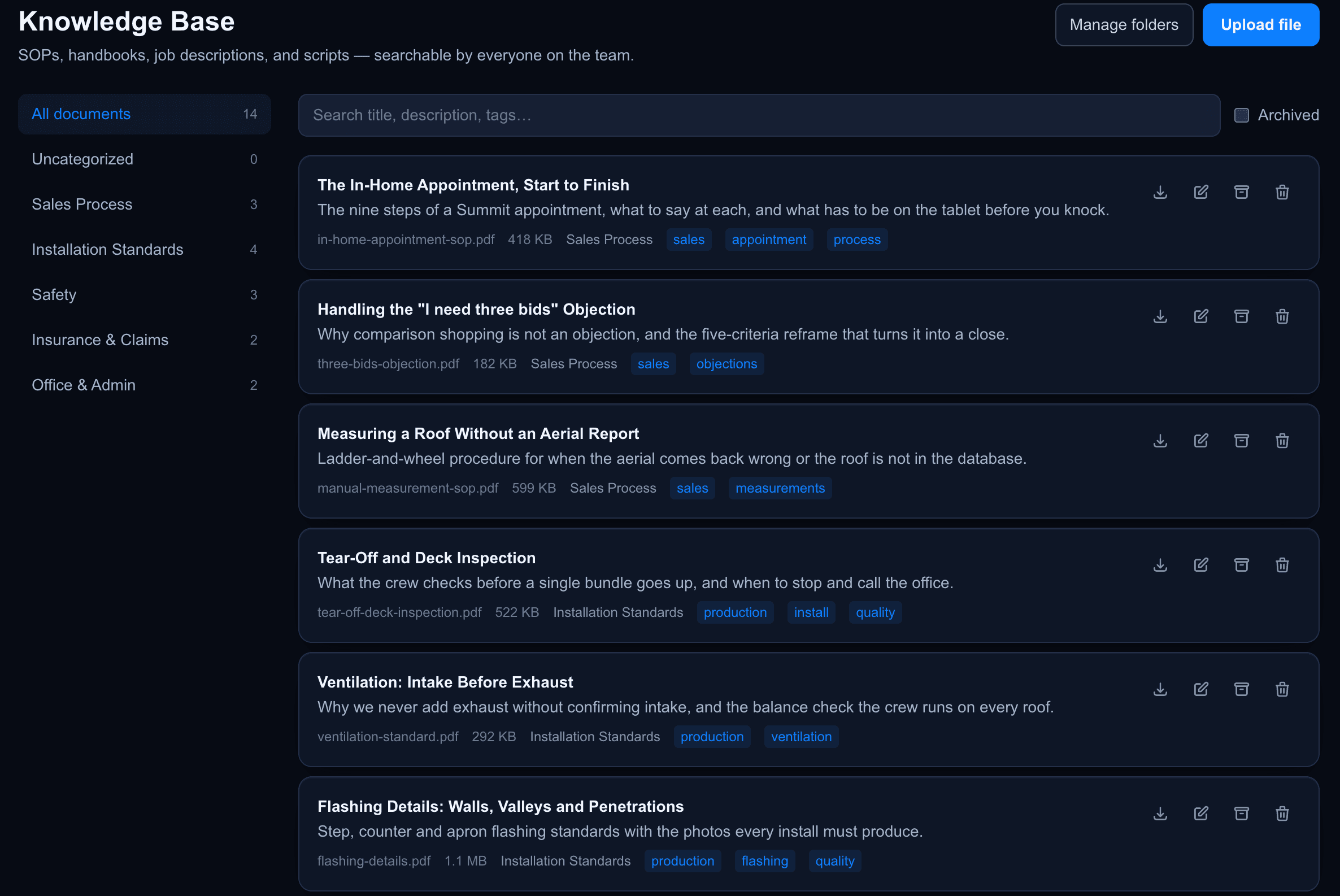
SOPs nobody can find get ignored. Putting them beside the pipeline your team already opens is the difference between a document and a standard.
SOPs people actually read
Written procedures, organized by department, versioned and searchable — in the same app as the jobs they describe.
- Departmental SOP library
- Meeting notes with owners and follow-ups
- Rocks, pebbles and sand for quarterly priorities
Onboarding that finishes
New hires get a structured path — paperwork, training and sign-off — so a rep's first week does not depend on who happened to be free.
Questions we get asked
- Where do SOPs live?
- In a searchable library organised by department, so a process lives somewhere the team can find it rather than in a folder nobody opens.
- Does it handle onboarding a new hire?
- Yes. An onboarding template becomes a checklist assigned to the new person, with steps that get marked off — so onboarding finishes rather than trailing away after week one.
- Can we track quarterly priorities?
- Yes — rocks, pebbles and sand, with owners. Meeting notes carry owners and follow-ups so what was agreed does not evaporate between meetings.
- Is this a replacement for a full HR system?
- No. It covers the operating side — SOPs, onboarding checklists, meetings and priorities. Payroll and benefits stay with your HR or payroll provider.
Keep reading
The numbers, from the source.
Reports read the same records the work happens in. Nothing is re-keyed, so the number on a report and the number on a job cannot disagree.
Production that reads from the job that was sold.
The work order is not a retyped version of the estimate — it is generated from it. Crews, materials, punch lists and QC all hang off the same job record.
See it on your own jobs.
We'll walk your pipeline through it — your trades, your pricing, your crews — and you can tell us where it breaks.